Getting Started Road Biking
I Googled "what do I need to start road cycling" three years ago and closed my laptop feeling like I needed a second mortgage. Spoiler, you don't.
My boyfriend told me all you need is a bike and a dream, this really means know your why. There will be tough days, my butt still hurts after a long day on the bike, but being able to remind yourself why you started will help you stick with it until you are flying down the mountain passes like a pro. Sticking with it is important as you are about to invest some money here. I can help you get the most out of it. You are the one who needs to make the most of it.
I would argue you need a bike, a dream and a helmet. To help you prioritise what you need to get started versus what is nice to have we are going to set some priorities:
- Safety
- Comfort
- Aesthetics
Yes sorry but the stylish matching pastel cycling clothes… it is last on our list.
The Helmet
You might be used to riding your commuter bike without one but in road cycling you'll quickly be going over 40km per hour. We need a good helmet to protect your very valuable brain.
Worth the money → Do not buy helmets second-hand, after a fall or an impact helmets need to be replaced. Not knowing what happened to the helmet before you owned it is not a good idea. The science is not settled but some studies show that MIPS or other similar rotational protection technologies provide more protection in an accident. Specifically, in an accident where your head hits an object at an angle, causing the head to rotate. It does have a higher price tag but putting safety first I would pay extra for the MIPS system in my helmet.
Nice to have → The cheapest MIPS helmet will do. After that the price increases either because of the brand name or because the helmet is lighter. Look at Decathlon's van Rysel helmet (~€90) or your local sport shop for a starting point.
Pro tip → Try different brands, each brand uses a different head mold to build their helmet on. You may find one brand fits your specific head shape better.
The Bike
Beg, borrow or steal, well maybe not steal. Bikes are pricey and if you are able to try one for a while to double check cycling is for you that is a great idea. I was not able to. I bought a 4th hand bicycle. It was not perfect but your first bike is not a lifelong commitment.
If borrowing is not an option, start with looking second-hand, Facebook marketplace, Buycycle or a local bike shop. Buying second-hand, especially as a shorter woman can be difficult. Since on average more men cycle than women (source) there are more men wanting to sell their second-hand bikes than women. This is changing and I love it but it will still take some time. Bikes are gender neutral but they tended to be too big for me.
How to know if the bike fits? With experience you will learn what feels right but for getting started most bigger bike brands will have size guides on their websites. Even if you are buying second-hand, go to the website and check what size they recommend for you.
Worth the money → If you are buying second-hand directly, have it checked by a bike shop, especially if it is a carbon bike as it can have cracks that are not visible to the eye. Some online bike resellers provide this service as well.
Nice to have → If at all financially possible I would get a carbon frame. Especially if you are planning to cycle with friends. Your options are Carbon or Aluminium, there are some nuanced differences but at a high level Carbon is lighter but more expensive. You should be able to buy second-hand for €1000-€1500.
If you live in a mountainous/hilly area I would recommend paying the extra for disc brakes. Disc brakes are metal discs on your wheels that get clamped while braking. Rim brakes are pads that press against the wheel itself when braking. Disc brakes are more expensive but are more effective at braking. My first bike had rim brakes, this was fine for when I lived in the Netherlands, as it was relatively flat. It was not ideal when I moved to Switzerland and ultimately led to me upgrading my bike after 3 years.
Pro tip → You do not need electronic shifting (button tap gear changes instead of cable), carbon wheels, a power meter (measures force on your pedals). In reality, once you have cycled for a few years you will want to upgrade and know what actually matters to you. Leave the fancy stuff for future-you.
Ready to Ride
With the dream, the helmet and the bike you are ready for some short rides close to home.
Your Emergency Kit
Next items would be your emergency kit:
Red light for the back of your bike — to increase visibility.
Saddle bag — that little bag that people have at the back of their bike under their seat.
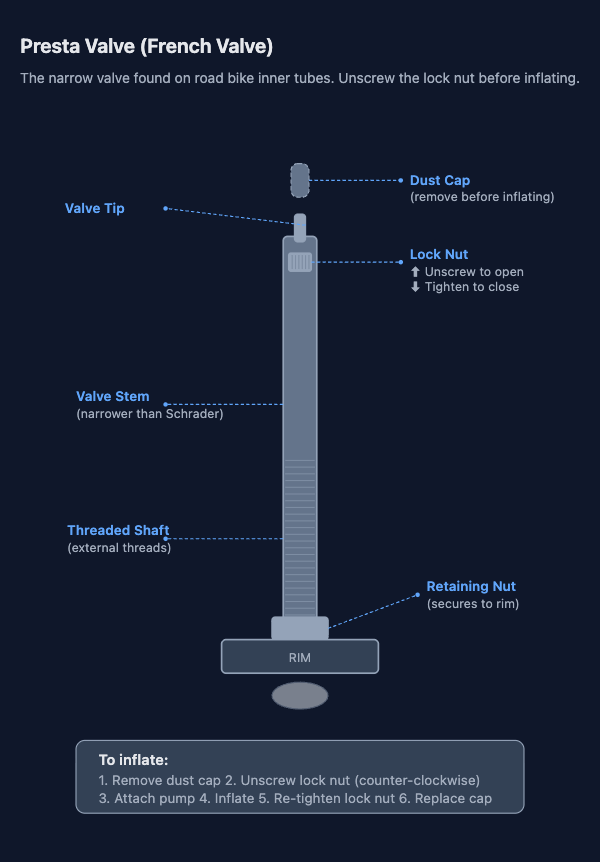
Tire pump — you will need this to pump your tires at home and also if you get a flat, when you buy yours make sure you are buying a pump that works with the valve on your tire. Most road bike tires use "Presta valves" the other option is "Schrader valves".
Tire levers — you need these to remove your tire if you puncture so you can replace your tube inside and then put the tire back on.
Spare tube — that fits your tire, your tire usually has the size written on it. Most road bike wheels are 700C and a specific width, usually 25mm or 28mm. Check the size and width written on your tire and make sure it matches the tube you are buying.
I know changing a tire can be daunting but in reality this happens very rarely, in three years it has happened to me once. I promise with these tools, some patience and a YouTube video you can figure it out.
You'll figure out the rest along the way. Off you go!